

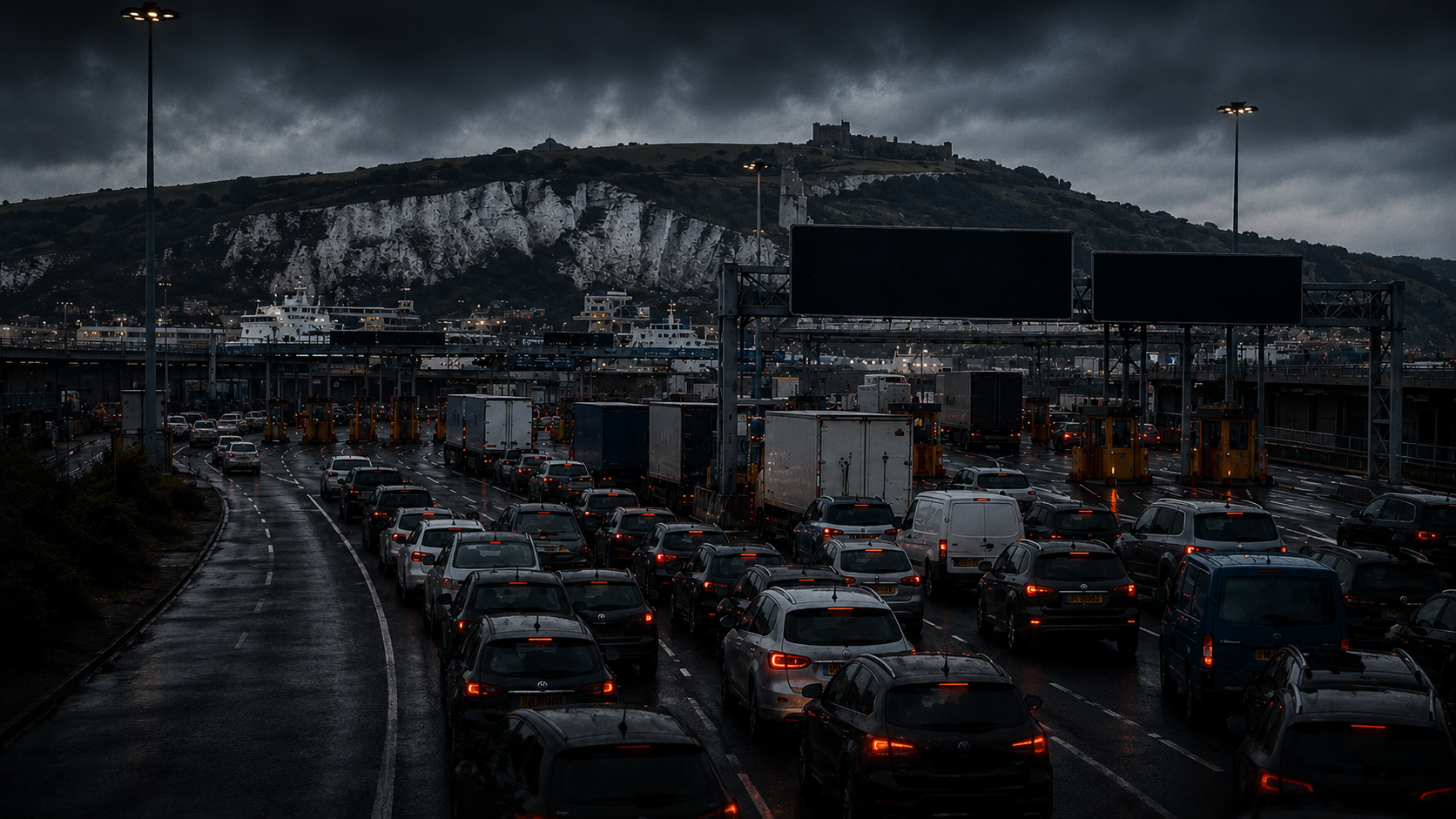
Long waits, missed ferries and suspended biometric checks at the Port of Dover have raised fresh questions about whether border systems are ready for the pressure of peak travel.
Thousands of travellers faced long queues at the Port of Dover this weekend after new EU border checks created major delays for passengers trying to cross from the UK to France.
The disruption became so severe that French authorities temporarily suspended additional checks under the EU’s new Entry/Exit System, known as EES, in an attempt to ease congestion and get traffic moving again. The system is designed to replace manual passport stamping with digital registration, including biometric checks such as facial images and fingerprints for non-EU travellers entering the Schengen area.
The problems came during one of the first major stress tests for the system at Dover. Around 8,000 cars were booked to travel through the port on Saturday, according to Associated Press, as families and holidaymakers moved through the UK’s busy bank holiday getaway period.
For many passengers, the issue was not simply inconvenience. Long waits in hot weather meant missed ferries, disrupted travel plans and uncertainty over whether families would reach hotels, bookings or onward journeys on time. The Guardian reported that travellers faced waits of around two hours, while other reports described longer queues during the disruption.
The Port of Dover said passengers who missed their booked ferry because of the queues could be placed on the next available crossing. Later on Saturday, the port said traffic had become “free flowing” after the extra checks were suspended.
But the bigger question is why the system struggled so visibly during a period of predictable high demand.
EES has been presented as a modernisation of Europe’s external borders. In theory, once passengers are registered, future crossings should become smoother and more secure. In practice, Dover’s layout creates a particular challenge: French border controls are carried out on the UK side before passengers board ferries, meaning any bottleneck at the border immediately pushes back into port traffic and surrounding roads.
That makes organisation critical. If booths, staffing levels, terminals and passenger flows are not ready for peak demand, the result is not just a slower border. It becomes a transport problem, a customer service problem and, for families stuck in cars, a human problem.
Reports suggest the checks were suspended because the extra data collection was slowing processing at a time when the port needed maximum throughput. AP reported that French border authorities stopped collecting additional data from non-EU passengers to speed up movement, while the Port of Dover’s chief executive, Doug Bannister, expressed frustration despite previous assurances about the system’s efficiency.
The situation also exposed how little flexibility travellers have when border systems fail. People can arrive on time, have the right documents, follow the instructions and still miss ferries because the queue ahead of them is moving too slowly. For families with children, elderly passengers, tourists with fixed accommodation, or workers travelling for business, a delay at Dover can quickly become expensive and stressful.
Travel groups have warned that EES checks may take longer at the border, especially during the rollout phase. ABTA says travellers should expect biometric registration to be in operation at participating European countries and should allow extra time, while noting that implementation may vary between countries and border crossing points.
That variation is part of the problem. A border system that works smoothly in theory can still fail if local infrastructure is not prepared. Dover is not an airport terminal where passengers move through controlled indoor lanes. It is a high-volume vehicle gateway where delays build quickly, cars stack up, and road access can become a pressure point.
There is also a public trust issue. For travellers, border modernisation is only acceptable if it feels organised. When new checks create confusion, long queues and sudden suspensions, people are left wondering whether the system was properly tested before being applied to real journeys.
The impact goes beyond one weekend. Dover is one of the UK’s most important ferry gateways to Europe. If similar disruption repeats during the summer travel season, the consequences could be significant: missed crossings, pressure on ferry operators, congestion on Kent roads and growing frustration among passengers who feel they are being caught between new rules and weak planning.
Supporters of EES argue that digital border checks will eventually improve security and make travel more efficient. That may still prove true. But the Dover delays show that border technology is only as good as the organisation behind it.
For now, the lesson is clear. New border systems cannot simply be switched on and expected to work under pressure. They need enough staff, enough space, working technology, clear communication and proper contingency planning for peak travel days.
At Dover this weekend, travellers paid the price when that system came under strain. The ferries kept moving, but for many people stuck in queues, the journey to Europe began with frustration, uncertainty and a reminder that modern borders can still fail in very human ways.
Spot an error? contact@theobsidian.media