

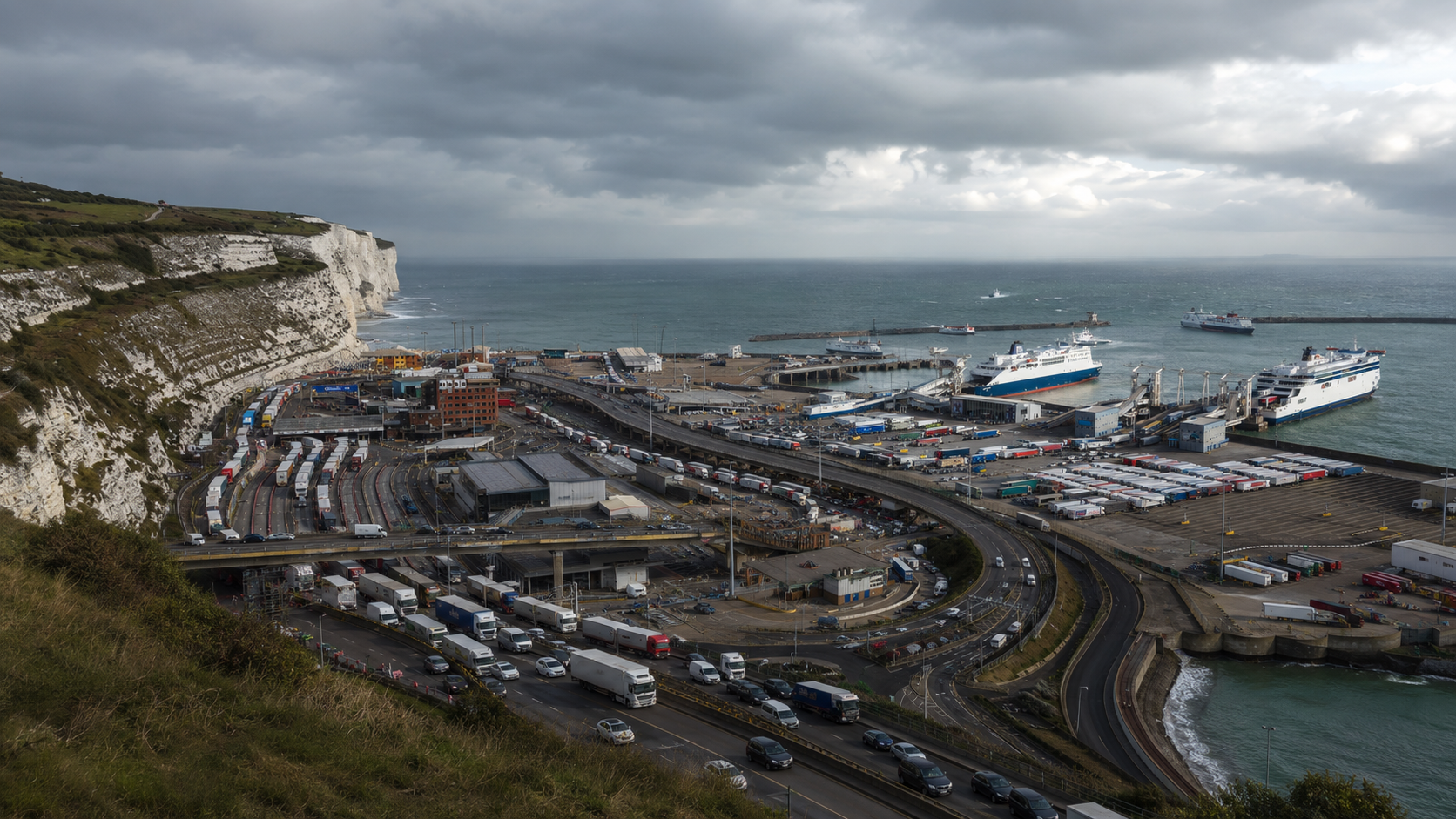
Dover’s latest travel delays were not just another busy weekend at one of Britain’s most important ferry ports. They were an early warning sign of the pressure now sitting at the border between the UK and mainland Europe.
During the bank holiday rush, passengers travelling from Dover to France faced long waits as new European Union Entry/Exit System checks added time to the border process. The disruption became serious enough for French border authorities to temporarily suspend extra checks in order to ease congestion.
The EU’s Entry/Exit System, known as EES, is designed to replace manual passport stamping with a digital border record. It registers details including a traveller’s name, travel document data, fingerprints, facial image, and the date and place of entry and exit for non-EU nationals travelling for short stays.
At Dover, the process matters because French border checks are carried out before passengers board ferries to France. That means delays at the border can quickly become delays at check-in, at the terminal, on surrounding roads, and eventually for ferry departures.
The Port of Dover had prepared for the phased introduction of EES, including passport verification, biometric enrolment and automated record creation for travellers. The port previously advised passengers to allow extra time, have travel documents ready and check operator guidance before travelling.
But the bank holiday weekend showed how quickly a technical change can become a human problem. Passengers were travelling in hot weather, with thousands trying to move through the port during one of the busiest periods of the year. Around 8,000 cars had booked crossings on the Saturday, according to the Associated Press, making it a major test for the new system.
For travellers, the issue is simple: a missed ferry can mean lost time, extra stress, changed plans and uncertainty over onward journeys. Reports said passengers who missed their ferry because of the disruption were allowed to board the next available crossing, but that does not remove the frustration of being stuck in long queues before a holiday or family trip.
The deeper concern is what happens next. If a busy bank holiday can place this much pressure on the system, summer travel could become an even bigger test. Dover is not just a local traffic problem. It is a crucial link in the movement of people between the UK and continental Europe.
Supporters of the new system argue that EES is meant to modernise the border, improve security and create a clearer digital record of entries and exits. But for passengers, the success of the policy will be judged less by its design and more by whether it works smoothly when thousands of people are trying to travel at the same time.
That is why the Dover delays matter. They reveal the gap between a border system that looks efficient on paper and one that must operate under real-world pressure: busy roads, ferry schedules, hot weather, family travel, staffing limits and the basic impatience of people stuck in queues.
For now, the suspension of extra checks helped ease the immediate congestion. But it also raised a larger question that will return with every major travel rush: can Europe’s new digital border system deliver security without turning the journey itself into the obstacle?
Spot an error? contact@theobsidian.media