

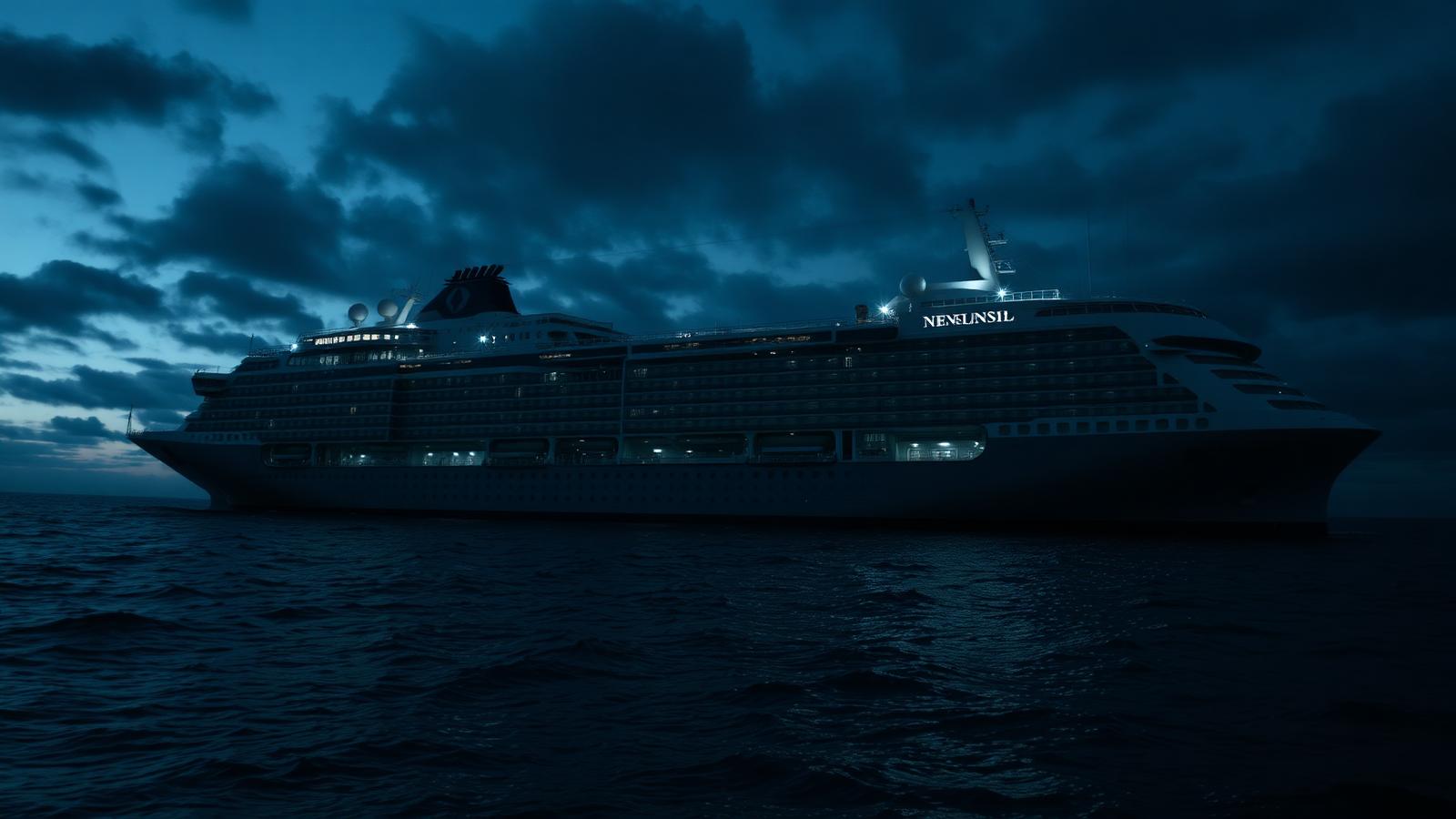
When the MV Hondius docked at Las Palmas in the Canary Islands on the second of May, twenty-three passengers were already too sick to walk down the gangway on their own. By the end of that week the World Health Organization had been formally notified by the United Kingdom, Spanish authorities had begun spraying disembarking travellers on the tarmac, and the United States Centers for Disease Control had quietly opened an emergency operations line for the eighteen Americans who had been onboard. As of the thirteenth of May, eleven cases have been linked to the outbreak across at least seven countries, and three of those passengers have died — a case-fatality ratio of roughly twenty-seven per cent.
The pathogen behind the cluster is Andes virus, a strain of hantavirus normally found in the rodent populations of southern Chile and Argentina. It is the only hantavirus known to transmit from person to person, a quirk of biology that for thirty years has worried virologists more than the case numbers ever justified. The Hondius outbreak is the first time that quirk has expressed itself outside South America, on the kind of densely packed, internationally mixed platform that makes contact tracing extraordinarily difficult. Eight of the eleven cases have been laboratory-confirmed; two are probable; one remains inconclusive and is still being tested.
Hantavirus is not a single disease but a family of them. In Europe and East Asia, the milder Puumala and Hantaan strains cause haemorrhagic fever with renal syndrome and kill fewer than one in every two hundred people they infect. In the Americas, the Sin Nombre virus and Andes virus cause hantavirus pulmonary syndrome — a sudden, drowning illness in which the lungs fill with fluid over a matter of hours — and kill between a third and forty per cent of those who develop it, even with intensive care. There is no vaccine. There is no antiviral. Treatment is supportive, which is medical shorthand for keeping the patient alive long enough for their own body to win.
In the United States, hantavirus has been a notifiable disease since 1995. The CDC has logged 864 cases through the end of 2022, with case-fatality around 35 per cent — fewer than thirty cases in a typical year, almost all of them in the rural West, and almost all traced to deer-mouse droppings stirred up while sweeping out a cabin or a barn. The Hondius cluster is something different. It is the first time American passengers have been quarantined inside the country for a hantavirus exposure that did not happen in the country, and the first time a cruise line has had to address a pathogen that the medical literature has historically described as 'not transmissible between humans, with the sole known exception of Andes virus in Patagonia'.
The risk to the broader public, all three major agencies stress, is low. WHO has classed the global risk as low and the regional risk for Europe and the Americas as moderate. The CDC has told American travellers there is no reason to change plans. The European Centre for Disease Prevention and Control is updating its cruise-ship surveillance guidance daily but has not raised its general travel-risk rating. NPR's medical desk this week summarised the consensus among American infectious-disease specialists in a single sentence: hantavirus is unlikely to be the next COVID. The argument is biological. Andes virus spreads through close, sustained, household-style contact with a symptomatic patient, not through the brief, casual exposures that allowed SARS-CoV-2 to circle the planet in three months.
The argument is also institutional, and there the Hondius outbreak is harder to read. Within seventy-two hours of the WHO notification, contact-tracing teams in fourteen countries were comparing passenger manifests against arrival records. Quarantine facilities were stood up at three airports. The cruise operator agreed to charter repatriation flights with onboard medical teams. By the standards of the systems that handled the early weeks of COVID-19 in 2020, this is a different planet. Whether the difference is durable, or whether it will erode the moment the headlines move on, is the question public-health officials are asking quietly among themselves and that the public health community will be asked, at some point, to answer in public.
For the families of the three passengers who did not survive, the epidemiology is beside the point. Two were elderly European travellers; the third was a crew member in his thirties. Their identities have not been released. The Hondius itself is now anchored offshore at a Spanish naval facility, its remaining crew under observation, its decks being washed down by men in pressurised suits — the kind of image that, in another year, would have been the only one anybody remembered.
Sources & References
Spot an error? contact@theobsidian.media