

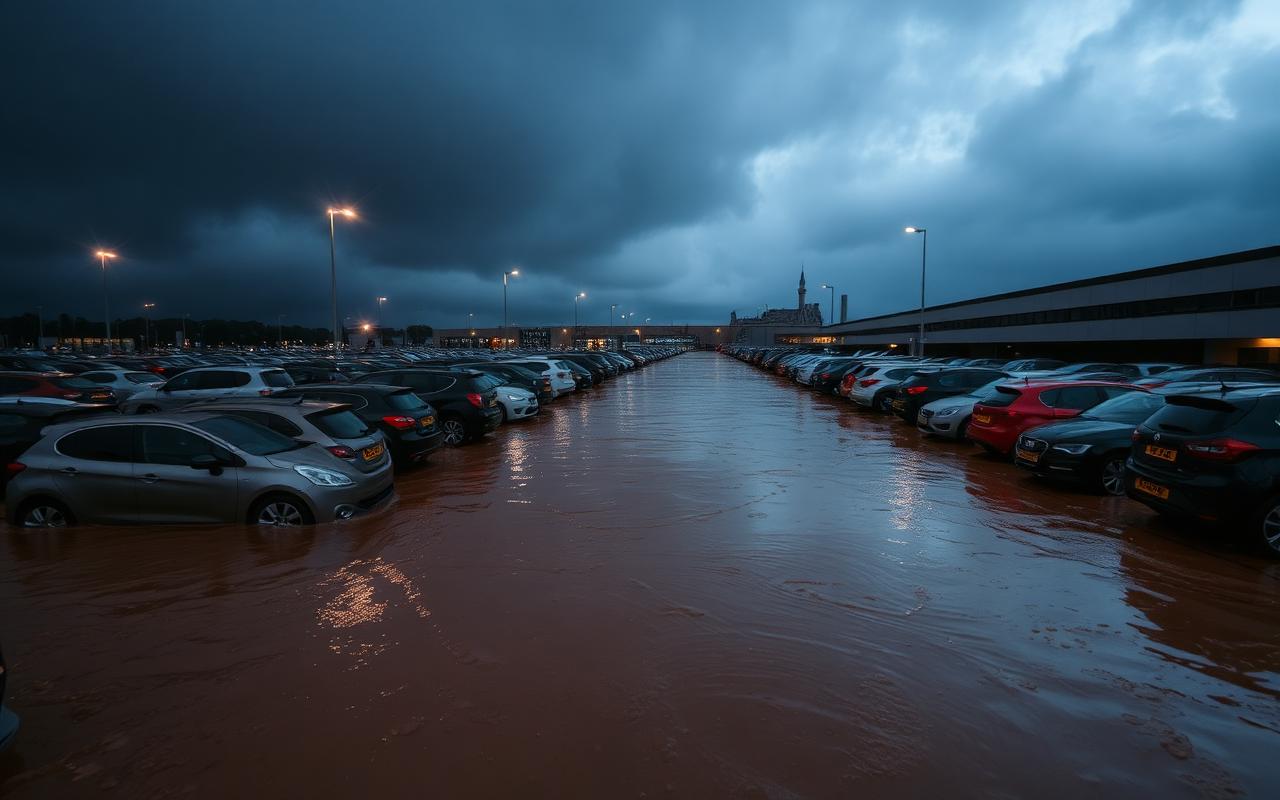
Hundreds of cars were left half-submerged at a long-stay park near Heathrow on Wednesday morning after a short, violent burst of rain overwhelmed drains across west London, stranding travellers, snarling the M25 approaches and prompting fresh questions about how the capital copes with rainfall that arrives faster than its Victorian sewers can carry it away.
Footage shared from the site showed row after row of vehicles standing in brown floodwater up to their door handles, their owners abroad and unreachable. Heathrow said the flooding was confined to a third-party off-airport facility and that flights were operating normally; the operator of the lot said it was working with insurers and would contact affected customers individually.
The Met Office had issued a yellow thunderstorm warning for southeast England the night before, and rainfall totals across parts of the Thames Valley exceeded a month's worth in under two hours. Transport for London reported flooding on sections of the District and Piccadilly lines, and Network Rail briefly suspended services into Paddington while crews cleared a tunnel mouth.
City Hall is again under pressure to accelerate the sustainable drainage programme that successive mayors have promised and successive budgets have trimmed. Climate scientists at Imperial College have warned for several years that London's combined sewer system, designed in the 1860s for a smaller, drier city, is now routinely asked to swallow rainfall it was never built to absorb.
For the travellers whose holiday will end with a phone call about a written-off Volkswagen, the immediate question is insurance. For everyone else, the more uncomfortable question is whether a single afternoon of summer rain — the kind London is forecast to get more often, not less — should be able to do this kind of damage at all.
Sources & References
Spot an error? contact@theobsidian.media